Restless Legs Syndrome
That crawling, itching, irresistible urge to move your legs at night — here's what's actually behind it.
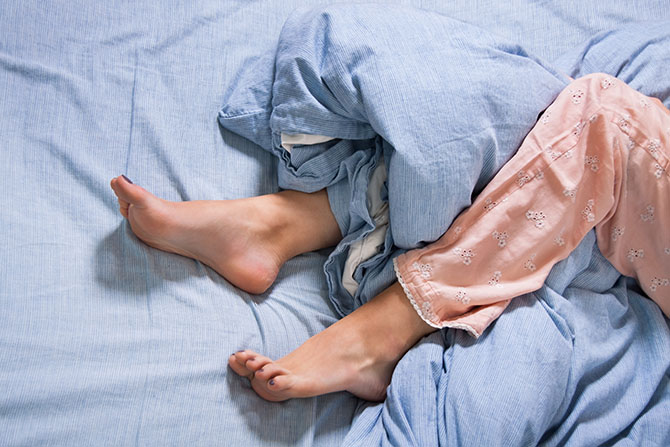
Restless legs syndrome (RLS) is a sleep-related movement disorder that causes an almost irresistible urge to move the legs, especially at night. This urge is typically accompanied by unusual sensations deep in the legs — often described as burning, tingling, prickling, or a jittery feeling. In some people, these sensations become painful.
Symptoms worsen when lying or sitting still and are temporarily relieved by walking or moving. They tend to intensify in the evening and at night, with relief arriving in the morning. RLS can begin at any age, including childhood, where it is often misdiagnosed as growing pains.
What is restless legs syndrome?
Restless legs syndrome (RLS) is a sleep-related movement disorder that causes an almost irresistible urge to move the legs, especially at night. This urge is typically accompanied by unusual sensations deep in the legs — often described as burning, tingling, prickling, or a jittery feeling. In some people, these sensations become painful.
Symptoms worsen when lying or sitting still and are temporarily relieved by walking or moving. They tend to intensify in the evening and at night, with relief arriving in the morning. RLS can begin at any age, including childhood, where it is often misdiagnosed as growing pains.
How common is it?
RLS affects 5% to 10% of adults. Women are 1.5 to 2 times more likely to have it than men. More than 50% of people with RLS report a family history of the condition, and first-degree relatives are 3 to 6 times more likely to develop it.
What does it feel like?
People describe the sensation as crawling, pulling, buzzing, tingling, or an internal restlessness that temporarily improves with movement. Because symptoms are worst during rest, most people notice them most while lying in bed, sitting on a couch, or during long periods of travel or inactivity.
Symptoms can vary significantly from day to day. In mild cases, RLS may occur irregularly with long periods of remission. In more severe cases, symptoms may occur every night and progressively worsen over time.
How does it affect sleep?
RLS can make it very difficult to fall asleep or return to sleep after waking. In severe cases, total sleep time may drop below five hours per night — a level of sleep loss greater than that reported for almost any other persistent disorder. The leg movements can also disturb a bed partner's sleep. Over time, RLS is associated with increased rates of depression, anxiety, and daytime fatigue.
Around 80% to 90% of people with RLS also experience periodic limb movements during sleep — involuntary twitching or flexing of the muscles while at rest.
What are the treatment options?
For mild cases, regular daytime exercise, warm baths, leg massages, and avoiding alcohol in the evening can reduce symptoms. If iron levels are low, increasing iron stores through supplements or IV treatment may help, as iron deficiency is a known contributing factor.
When treatment is needed, the most common options are displayed as a row of cards.
Dopamine Agonists
First-line treatment
Medications such as ropinirole and pramipexole affect dopamine levels in the brain. The same class of drugs is commonly used to treat Parkinson's disease.
Anticonvulsants
For mild cases and pain
Gabapentin is effective for milder RLS or for patients who experience painful sensations and cannot tolerate dopamine agonists.
Benzodiazepines
Sleep quality support
Clonazepam is less effective at reducing RLS symptoms directly, but can improve overall sleep quality in lower doses.
Opioids
Severe cases only
Medications such as codeine are reserved for severe cases that do not respond to other treatments.
When should you get assessed?
If symptoms are happening regularly, affecting your sleep, or making evenings difficult, it is worth speaking with a sleep physician. An assessment typically includes a symptom review, sleep history, medication review, and a discussion of contributing factors.