Parasomnias: Unusual Behaviours During Sleep
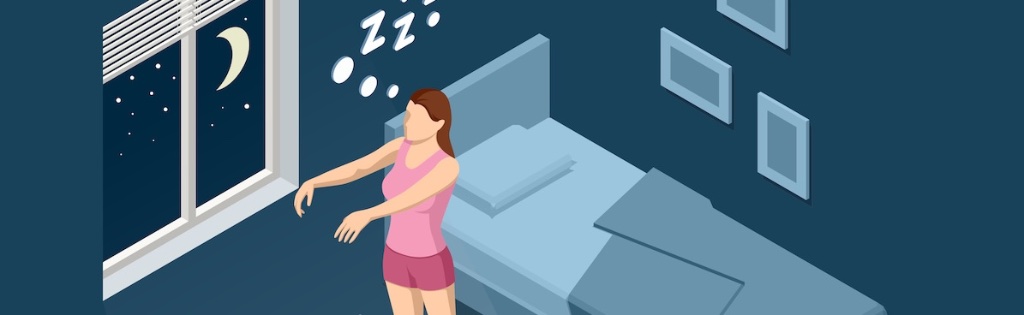
Parasomnias are a group of sleep disorders that cause unusual or disruptive behaviours during sleep. They include things like sleepwalking, night terrors, sleep talking, and acting out dreams.
These behaviours happen when the brain gets "stuck" between sleep and wakefulness, causing partial arousals that the person usually has no memory of the next morning.
Parasomnias are more common than most people realize, and they are not a sign of psychiatric illness. With the right support, most cases can be managed effectively.
What Happens During a Parasomnia?
During a normal night, the brain moves through different sleep stages: light sleep, deep sleep, and REM sleep (the stage when most dreaming occurs).
Parasomnias happen when the transitions between these stages are disrupted. Depending on which sleep stage is involved, the experience looks very different.
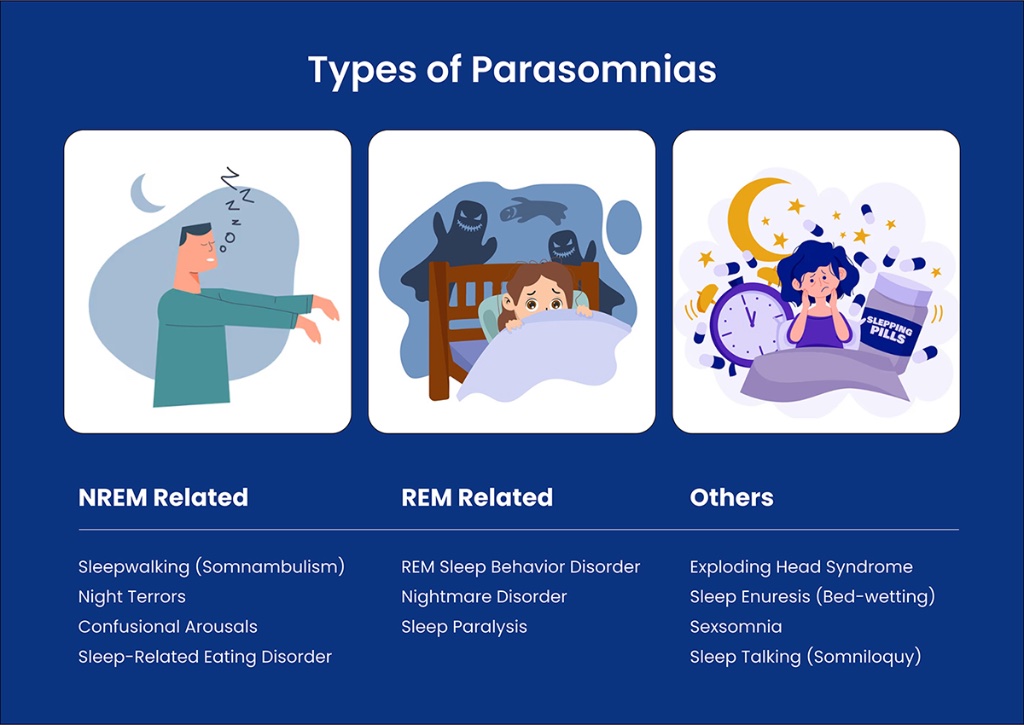
There are two main categories:
- NREM parasomnias (from deep sleep) tend to occur in the first few hours of the night. The person usually has no memory of the event.
- REM parasomnias (from dream sleep) tend to occur later in the night. The person may wake up and remember a dream or the episode clearly.
Types of NREM Parasomnias
NREM parasomnias emerge from deep sleep and are most common in children, though they can occur at any age.
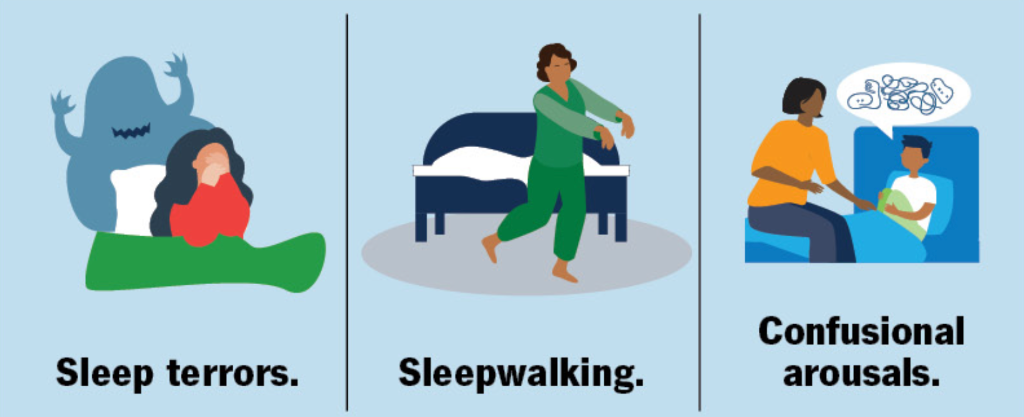
Confusional Arousals
A person partially wakes up but remains confused and disoriented. They may mumble, move slowly, or respond in ways that don't make sense. Episodes are usually brief, and the person has no memory of them in the morning.
Confusional arousals are more likely to occur when a person is sleep-deprived, stressed, or taking certain medications.
Sleepwalking
The person gets out of bed and moves around while still asleep. Their eyes may be open, but they are not fully aware of their surroundings. Episodes can range from sitting up in bed to walking through the house.
Sleepwalking is more common when a person is sleep-deprived, has consumed alcohol, or has a family history of similar behaviours.
Sleep Terrors
Sleep terrors are episodes of intense fear that occur suddenly during deep sleep. The person may sit up in bed, scream, appear terrified, and show signs of physical agitation. Unlike nightmares, the person usually has little or no memory of the event.
Sleep terrors are not the same as nightmares, which occur during REM sleep and are remembered clearly on waking.
Sleep Talking (Somniloquy)
Sleep talking can range from brief sounds or words to full sentences. It can occur in any stage of sleep and is usually harmless. There is no specific treatment, though addressing other sleep disorders that may be contributing can help.
Sleep-Related Eating Disorder
Some people eat during the night while in a sleep state, with little or no awareness or memory of doing so. Foods consumed may be unusual or eaten in large amounts. This condition is associated with other sleep disorders and, in some cases, certain medications.
Types of REM Parasomnias
REM parasomnias occur during dream sleep, usually in the second half of the night.
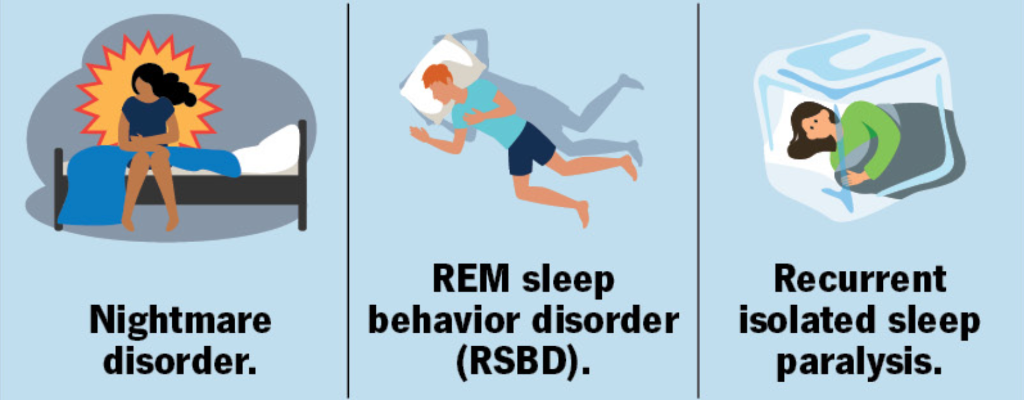
REM Sleep Behaviour Disorder (RBD)
In RBD, the normal muscle paralysis that occurs during REM sleep does not function properly. As a result, the person physically acts out their dreams. This can include talking, shouting, punching, kicking, or jumping from the bed.
Unlike NREM parasomnias, the person typically wakes up quickly, is alert, and can remember the dream clearly.
RBD is more common in men over age 50 and can be associated with neurologic conditions such as Parkinson disease and Lewy body dementia. Early diagnosis is important for long-term monitoring.
Sleep Paralysis
Sleep paralysis occurs when a person wakes up but temporarily cannot move or speak. Episodes usually last a few seconds to a few minutes and resolve on their own. They can feel frightening, especially the first time they occur.
Sleep deprivation, irregular sleep schedules, and stress are common triggers. The condition is generally harmless, though recurring episodes should be discussed with a sleep specialist.
Nightmare Disorder
Most people have occasional nightmares. Nightmare disorder is diagnosed when nightmares are frequent, distressing, and repeatedly interrupt sleep.
Nightmares are commonly associated with stress, trauma, and certain medications. Effective treatments include both psychological approaches and, in some cases, medication.
Less Common Parasomnias
Exploding Head Syndrome
Despite the alarming name, this condition is not dangerous. A person hears a sudden loud noise or bang in their head just as they are falling asleep or waking up. It can cause significant anxiety, but it does not cause pain and is not a sign of a medical emergency.
Sleep-Related Hallucinations
Some people see, hear, or feel things that are not there as they fall asleep or wake up. These experiences can feel very real but are a natural result of the brain transitioning between sleep and wakefulness.
What Causes Parasomnias?
Parasomnias are often influenced by a combination of factors. Common contributors include:
- Sleep deprivation or irregular sleep schedules
- Stress or emotional disruption
- Alcohol or certain medications
- Untreated sleep disorders such as sleep apnea or restless legs syndrome
- A family history of parasomnias
- Neurologic conditions (particularly relevant for RBD)
Identifying and addressing these factors is often the first step in managing symptoms.
How Are Parasomnias Diagnosed?
A sleep specialist will usually begin with a detailed clinical history, including:
- A description of the events and when they occur during the night
- Your sleep schedule and any recent changes
- Medications, alcohol use, and stress levels
- Reports from a bed partner or family member who has witnessed episodes
You may also be asked to keep a sleep diary for one to two weeks.
In some cases, an overnight sleep study (polysomnogram) is recommended. This test monitors brain activity, breathing, heart rate, and body movements during sleep. A video recording may also be included to capture any unusual behaviours.
A sleep study is particularly important for confirming REM sleep behaviour disorder and ruling out other conditions that may be contributing to symptoms.
How Are Parasomnias Treated?
Treatment depends on the type of parasomnia, how often episodes occur, and whether they are causing injury or significantly disrupting sleep.
Sleep Hygiene and Lifestyle Changes
For many people, improving sleep habits is the most important first step:
- Maintain a consistent sleep and wake schedule
- Get enough sleep each night and avoid sleep deprivation
- Limit or avoid alcohol, particularly close to bedtime
- Reduce stress where possible
- Treat any underlying sleep disorders
Safety Precautions at Home
For parasomnias that involve movement, making the sleep environment safer is a priority:
- Remove sharp or dangerous objects from the bedroom
- Use a lower bed or place a mattress on the floor
- Pad or move nearby furniture
- Consider door alarms or wedges if leaving the bedroom is a risk
- Sleep separately from a partner if injuries have occurred
Psychological Approaches
- For nightmare disorder, an approach called imagery rehearsal therapy can be effective. This involves changing the storyline of a recurring nightmare while awake and mentally rehearsing the new version before sleep.
- Relaxation techniques, stress management, and in some cases hypnotherapy may also help with NREM parasomnias.
Medication
When episodes are frequent, potentially harmful, or significantly affecting quality of life, medication may be recommended. A sleep specialist will determine the most appropriate option based on the type of parasomnia and your overall health. Medication decisions are individualized and reviewed regularly.
When Should You See a Doctor?
Speak with a sleep specialist if you or someone you live with:
- Regularly acts out dreams, walks, or behaves unusually during sleep
- Has been injured or has injured a partner during sleep
- Experiences frequent or distressing nightmares
- Has episodes that are becoming more frequent or more intense
- Feels unrested despite a full night of sleep
Parasomnias are medical conditions, not signs of psychological instability. Most people respond well to treatment with the right combination of education, lifestyle changes, and medical support.